Discovering Poets: John Fuller

Few English writers have given me more intellectual reading pleasure in the past decades than Ian McEwan, so it was with great anticipation that I started reading his latest, What We Can Know, when it finally became available in the Netherlands in the original English – annoyingly weeks after its Dutch translation – only to be disappointed by what I perceived as its forced structure and bloodless intellectualism. But the book did yield some bounty by way of a crucial element in the story, namely the corona that one of its main characters, elderly poet Francis Blundy, writes for and dedicates to his wife, with the title “A Corona for Vivien”. 

According to Wikipedia, a corona is ‘a sequence of sonnets, usually addressed to one person, and/or concerned with a single theme. Each of the sonnets explores one aspect of the theme and is linked to the preceding and succeeding sonnets by repeating the final line of the preceding sonnet as its first line. The first line of the first sonnet is repeated as the final line of the final sonnet, thereby bringing the sequence to a close.’ As if this doesn’t constitute enough of a tour-de-force, in some coronas the last sonnet also consists of the first lines of all the previous sonnets, constituting a ‘sonnet redoublé’ or ‘heroic crown’, comprising fifteen sonnets. 

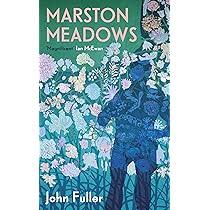
The corona that McEwan composed for his book was apparently inspired by a poem by John Fuller that ran in the Times Literary Supplement in 2021: “Marston Meadows: A Corona for Prue”, that Fuller dedicated to his wife of 65 years. This breathtakingly clever but also very moving poem is not the only one in which Fuller utilizes a technically challenging literary form. His collection ‘Marston Meadows’ contains poems with all kinds of complex and playful rhymes, anagrams, even one whose syllabic structure is based on the first fourteen digits of pi, “Winter Cadae”. It starts like this: 

In winter 

We 

Are near freezing 

In body and mind, 

But the thought of cycles consoles us. 

Get it, also the title? And it’s ten pages.  

Besides this fun (?) aspect, however, Fuller’s deeply felt and rich poetry consists of much more than just clever stuff for nerds or puzzle enthusiasts, and it’s worth the time and effort to discover. 

Here’s an interview with John Fuller. 

Discovering Poets: Frank O’Hara

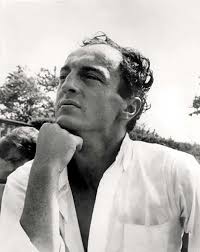
We’re reading Frank O’Hara’s Selected Poems with the poetry reading group. He was one of the New York Poets – around 1960 –, a group of poets whose work could be characterized as witty, urban and abstract expressionistic. It took me some time to get used to him, as I faithfully started at the beginning of the collection – which I assume was also more or less the beginning of his writing career, though I’m not really sure because the book doesn’t give any clues as to publication dates, nor any titles of his collections – and he was still associating very freely back then. His imagery didn’t really seem to serve to tell a story and doesn’t really pull the reader (at least not this reader) into the poems, so I thought this one was not for me. Also, his enthusiastic name-dropping and the whiff of hippiedom that emanated from his – presumably autobiographical, but of course you can never be sure – musings kind of annoyed me.  

But then I skipped the first half of the volume and started reading again in the middle, where I assumed – after some googling – his most well-known collection, Lunch Poems, begins, with the poem “A Step Away from Them”, a truly beautiful poem that made me real happy. Here his approach – guy walking the streets of New York describing what he sees and feels, reminiscing about departed friends, such as Jackson Pollock, now there’s a name worth dropping – really works. It is light – despite the departing aspect – and pleasantly unpretentious and life affirming. Then I read two more rather well-known – though not outside the USA, I think – poems, “The Day Lady Died” and “Personal Poem”, that had that same hopeful, honest atmosphere.  

I don’t assume that all the poems in this collection are like this, but it’s a nice idea, writing poems about what you experience during your lunch break. You could consider it as a very short vacation, with your senses even more heightened than in a real one. What better time to wax poetic?

Watch Frank O’Hara read “Having A Coke With You”.

Poetry Exercises VIII


How History Affected Me

History has been merciful to me 

by ignoring my existence 

my street was never occupied 

and most violence was domestic 

I never really had to fight authorities 

least not official ones, the bullies were inside. 

Poetry Exercises VI

Winter Song

 Again, the cold November wind had swept its 

little specks of brown and orange to us 

heralding winter’s icy grid, turning green of tree and bush 

back to autumn shade, sending all that summer blossom 

in our heart had stirred back into the drafty spaces 

 of the house we had presumed abandoned for good. 

Still numbed by warmth of days that seemed eternal 

we breathed the air – already carrying next season’s seeds –  

and danced to the rhythm that summoned us back home 

throwing off the burden of a harvest that started last spring. 

Poetry Exercises V

Postpartum

Now take for instance some drawers, empty them 

And fill them up again with useless matter, promise them 

Utility, and to love them with whatever forgotten intention 

Will strike you again accidentally, 

And forget everything once more – that is everything that paralyzes, 

Switches on and off like sound, quickly or slowly 

Dies away – forget this.  

Revisit the spaces in your house, 

Look into the nooks as you bend over dreaming. 


Let the solitary eye run its cool course again. 

Poetry Exercises IV

Valkenburg lake, October ‘98

 An artificial lake at rush hour 

water crashes against the wooden jetty 

winter darkness coming 

twenty meters from the shore 

his shadow hovers. 


As hurricane Mitch throws itself on Hondurans 

and lightning scores an entire Congolese football team 

– final result 1-1, opposing team unharmed – 

provinces are flooded 

Queen and notables flutter at farms dikes counties 

topography; 

flood in the Low Countries 

sandbags at the door, but unlike you, 

this control tower invited no storm of its own 

just helicopters geese oystercatchers 

small birds of prey and gliders 

and one drowning surfer. 

Poetry Exercises III

Hope, etc.

Her carefully placing a  

winter carrot in her shoe. 

Deciding 30% recurrence isn’t 70. 

People in parks drawing in very small  

notebooks. 

Soft-spoken young woman 

asking if she can zoom in to poetry  

class next week as she’ll be in  

Valencia, at her sister’s. 

Solitary lilac saffron crocus in the  

neglected part of your garden – cutting  

three tiny bloodred pistils, drying  

them on the stove. 

Picture of Vladimir chasing butterflies 

with his net

his chunky body, his bold head.

Checking out prices for a  

membership at the athletics club for  

after the operation, at sixty-three. 

Still writing and reading poetry. 

Hummingbird hawkmoth 

– looked it up –  

diligently sucking nectar  

from the verbena flowers. 

Single mum who choked up  

when she read the last line of her  

poem – it’s about her kids. 

Selecting a new recipe the night  

before and making a grocery list. 

Watering the freshly planted seeds at  

the end of the summer, when the  

forecast said rain. 

Poetry Exercises II

(two d i v e r g e n t poems, after listening to Captain Beefheart’s Hey Garland, I Dig Your Tweed Coat)

Give me back my heart

you loony 

the hapless sprout from a

fairytale-clout 

clobbered him from underneath a

spider’s house 

the words of a God scented through

the thick curtain overthrown by

Jesus-deep nothingness 

his belly ached like belly’s lead 

torn smiling like a headmaster’s

stress-pain 

she was a grandmaster in her

icy skull-laked naked

saviouress 

people peopled jazzy chested

chess-games in the open sun 

he barfed hairy seizures

fit open into a one-cloud mind 

leave this holy mind of mine

he mimed 

give me back my heart you fool 

you loony 

give me back my heart

you tune

Bill’s Apocalypse

The perfect mirror cracked  

blossomed open into a thousand holograms  

maybe more 

burst tinkling constantly 

transforming itself  

like a swarm of  

bumblebees in hot mid-day 

while blue-collared black-and-white-eyed waiters  

whined that there was no one there to pick up the pieces. 

As the evening grew louder Bill checked out of his tomb  

destroying six spiders and an ant with one giant step  

he towed off the stone marked end of mankind 

a child cried – a mouse leaped before its eyes 

morning swooped in.

Poetry Exercises I

(pantoum: abcdbedfegfhgcha)

Night

The fridge again, with a rattling shake  

ending the humming one-sided conversation 

sends me back to the city’s distant quiet voice 

in this too big bed, every dream gets overcrowded 


Ending the humming one-sided conversation 

I wake up paralysed  

                                           birds of prey were planning to ravish me 

in this too big bed, every dream gets overcrowded 

if only my funeral would be as well attended 


I wake up paralysed 

                                          birds of prey were planning to ravish me 

the morning paper slams through the door 

if only my funeral would be as well attended 

perhaps this night’s riddles will inform the day’s vertigo 


The morning paper slams through the door 

sends me back to the city’s distant quiet voice 

perhaps this night’s riddles will inform the day’s vertigo 

The fridge again, with a rattling shake.